As solar technology continues to revolutionize the way we use energy, more Australians are turning to solar power to reduce electricity bills and lower carbon emissions. However, one common question arises for many property owners: Should I choose residential or commercial solar panels?
While both serve the same purpose—converting sunlight into electricity—their design, scale, and installation methods differ greatly. Choosing the right system depends on your property type, energy consumption, and budget. Let’s break down the key differences between residential and commercial solar panels, and help you determine which one is best suited for your needs.
Understanding the Basics
Before diving into the differences, it’s important to understand what these systems are designed for.
Residential solar panels are primarily used in homes and small residential properties. These systems are typically smaller, ranging from 3kW to 10kW, and are designed to meet the average household’s energy requirements.
Commercial solar panels, on the other hand, are installed on office buildings, warehouses, schools, and large business facilities. These systems are much larger, ranging from 30kW to several megawatts, designed to support high energy demands across multiple operations.
Both types harness sunlight through photovoltaic (PV) cells to generate clean electricity—but their scale and purpose make a significant difference in performance and installation requirements.
Size and Power Output
The most obvious difference between residential and commercial systems is size and energy output.
Residential panels are smaller, usually around 65 inches x 39 inches, and provide about 350 to 450 watts per panel. They are ideal for rooftops with limited space.
Commercial panels, however, are larger—about 78 inches x 39 inches—and can generate 450 to 600 watts per panel. This makes them more efficient per square meter but also heavier and more demanding in installation space.
So, if your goal is to power an entire manufacturing facility or an office building, a commercial system is your best choice. For homeowners looking to reduce monthly bills, a residential setup is more than enough.
Design and Aesthetic Considerations
For homeowners, aesthetics often play a key role. Residential solar panels are designed to blend seamlessly with the home’s roof structure and exterior design. Many homeowners prefer all-black panels or low-profile mounting systems for a sleek and minimal look.
In contrast, commercial solar panels prioritize function over form. Since most installations occur on flat rooftops or ground-mounted systems, appearance is less of a concern. The goal is maximum energy production, not visual appeal.
Installation Process
The installation process for residential and commercial systems differs in scale, time, and complexity.
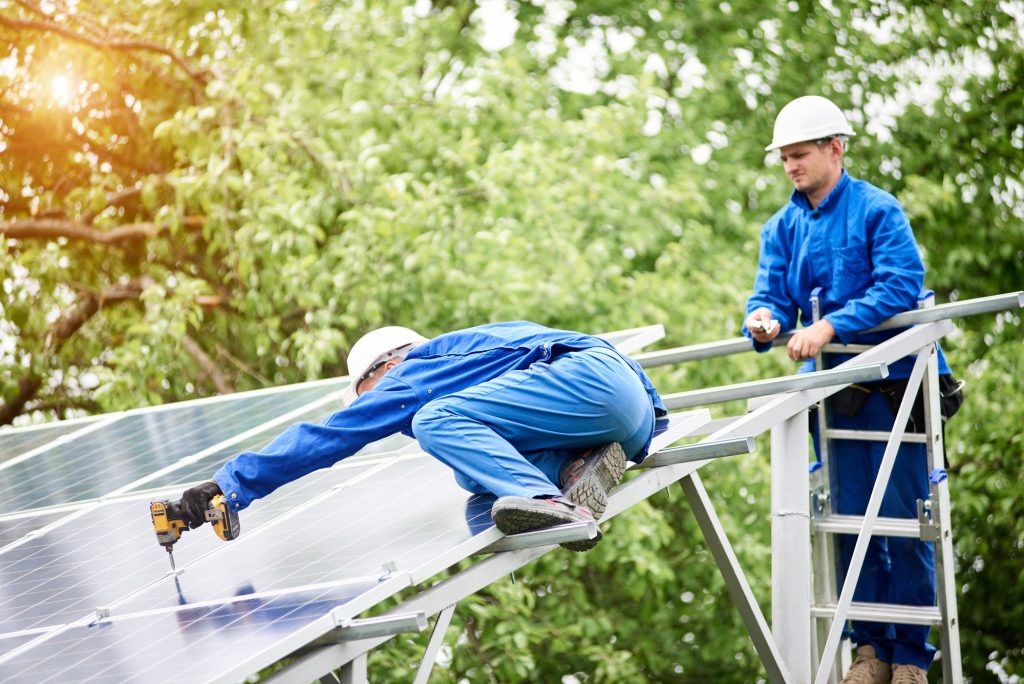
Residential installation typically takes 1–3 days and involves fewer panels, lighter wiring, and simpler inverters. The process is straightforward, and most systems can be connected to the grid within a week.
Commercial installation, however, can take weeks or even months, depending on system size and site conditions. It involves detailed engineering, load assessments, and often requires more advanced three-phase electrical systems to handle higher voltage levels.
Additionally, commercial projects may require permits, design approvals, and coordination with multiple stakeholders—adding more time and planning to the installation phase.
Efficiency and Technology
Commercial solar panels are generally more efficient than residential ones due to their larger size and advanced cell technology. They often use monocrystalline cells, which deliver superior performance and energy output.
Residential systems, while slightly less efficient, have improved drastically in recent years. Many homeowners now opt for high-efficiency residential panels that offer strong output even on small rooftops or in partial shading.
If your space is limited, efficiency should be your top priority. Investing in premium residential panels ensures better performance per square meter.
Cost and Return on Investment (ROI)
The cost of a solar system depends on size, installation complexity, and equipment quality.
Residential solar systems in Melbourne typically cost between $4,000–$10,000, depending on capacity and panel type. Most homeowners achieve payback within 3 to 5 years, especially with government rebates and feed-in tariffs.
Commercial solar systems are much larger investments, ranging from $30,000 to $250,000+, depending on scale. However, the ROI is often faster due to higher electricity consumption and bulk installation discounts. Businesses also benefit from tax deductions and energy-saving incentives across Victoria.
For both systems, the long-term savings significantly outweigh the initial investment—especially given rising electricity costs.
Maintenance and Durability
Both systems require minimal maintenance, but their upkeep differs slightly due to size and exposure.
Residential systems need cleaning 2–3 times a year and an inspection every few years. Most panels come with warranties of 20–25 years.
Commercial systems, due to their larger scale, require regular monitoring and maintenance contracts. Cleaning, inverter checks, and performance audits are essential for maintaining peak efficiency.
In both cases, choosing a reputable solar maintenance company ensures your panels deliver consistent energy output year after year.
Energy Storage Options
Energy storage systems (solar batteries) have become increasingly popular.
For residential solar, batteries like the Tesla Powerwall allow homeowners to store excess energy for nighttime use or during power outages.
For commercial applications, larger battery banks are used to manage peak demand periods and improve grid stability. These systems can also provide backup power for critical operations during outages.
If energy independence is your goal, pairing your solar panels with a reliable battery system can make a big difference.
Environmental Benefits
Both residential and commercial solar systems offer tremendous environmental benefits. Every kilowatt of solar energy produced reduces greenhouse gas emissions, making a measurable difference toward Australia’s sustainability goals.
However, commercial installations have a larger collective impact due to their scale. A single large business switching to solar can offset the carbon footprint of dozens of households.
For eco-conscious homeowners and business owners alike, solar power remains one of the most impactful decisions you can make for the planet.
Which One Is Right for You?
Choosing between residential and commercial solar panels ultimately depends on your property type, energy needs, and budget.
Choose Residential Solar Panels if:
You own a home or small property
Your energy consumption is moderate
You want a visually appealing setup
You’re looking for quick installation and payback
Choose Commercial Solar Panels if:
You run a business or manage large facilities
You consume high amounts of electricity
You have a larger budget for long-term investment
You want to maximize savings and sustainability impact
Both systems are smart choices—just on different scales.
Conclusion
Whether you’re a homeowner in Melbourne looking to cut utility bills or a business owner aiming for sustainable energy independence, solar power is a game-changer.
While residential solar panels offer affordability and simplicity, commercial solar systems deliver greater efficiency and returns for large-scale operations.